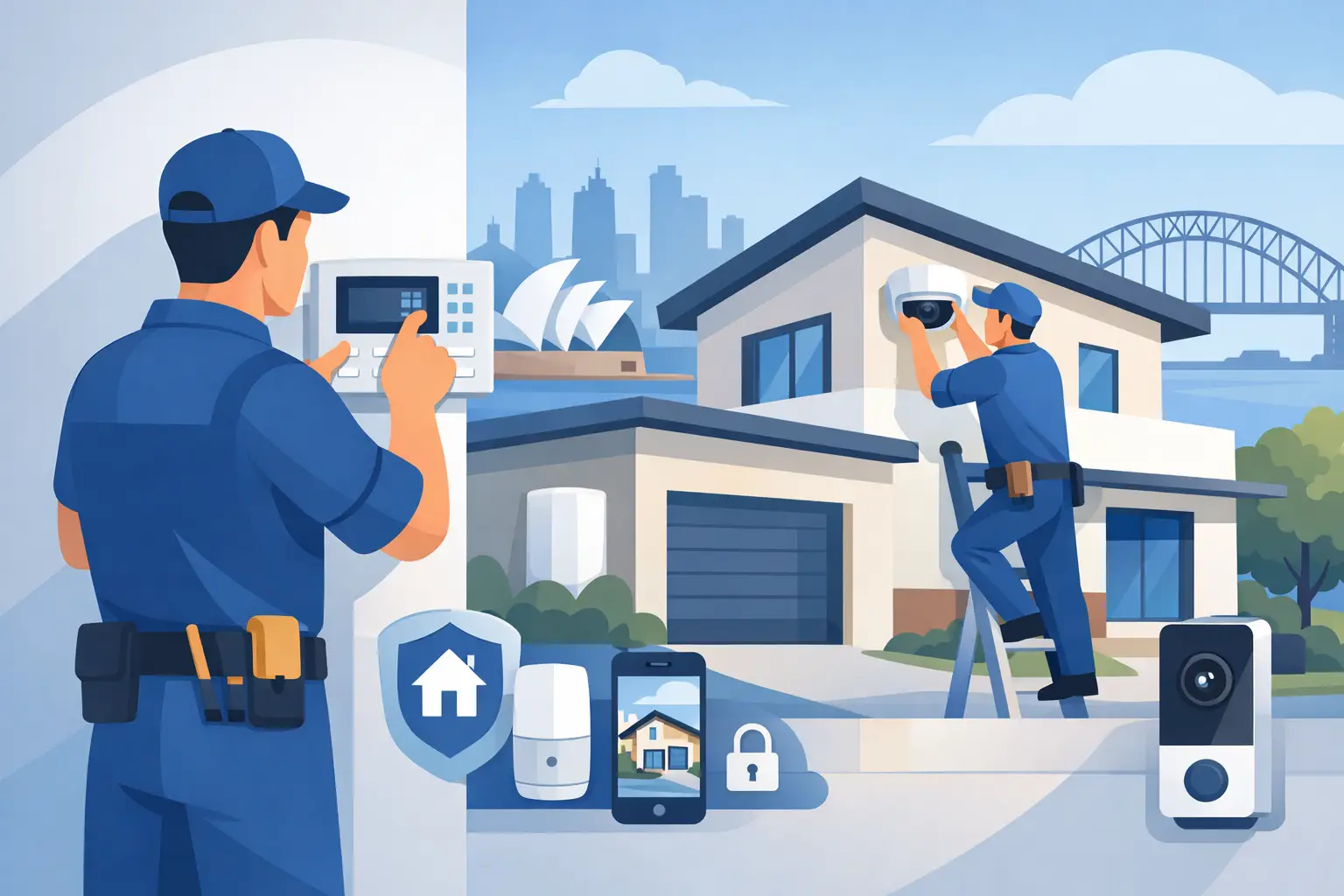
A front door camera alone will not protect the side gate, the garage, or the back window that cannot be seen from the street. Effective home security system installation Sydney properties can rely on starts with how people actually move around your home, where valuables are kept, and how quickly help is needed if something goes wrong.
For Sydney homeowners, landlords and small-business operators, the right system is rarely a box bought off the shelf. It is a considered combination of detection, visibility, warning and response. The best result is a security plan that is straightforward to use every day and dependable when you are away, asleep or dealing with an emergency.
Start with a security assessment, not a product list
Every property has weak points. A terrace may need attention at the rear laneway and front entry. A freestanding home may have multiple accessible windows, a detached garage and a side path hidden from neighbours. An apartment can require better control over entry points and common-area visibility, while a shop or office needs to protect staff, stock and access after hours.
A proper assessment identifies the likely entry routes, blind spots, high-value areas and habits that affect security. For example, a camera facing a driveway is useful, but it may not identify someone entering through an unlit side gate. A motion detector in a hallway may provide better internal coverage than several sensors placed in low-risk rooms.
The goal is not to put a device in every corner. It is to create overlapping protection so an intruder is deterred, detected and recorded before they can move freely through the property.
Build your system in layers
A reliable home security system is usually made up of several connected layers. The right mix depends on the property, your budget and whether you need protection for people, premises or both.
Alarm detection for fast warning
A quality burglar alarm remains the foundation of many residential and commercial installations. Door and window contacts can alert you when protected openings are breached, while motion detectors cover internal routes such as hallways, living areas, offices and storage rooms. Glass-break detection may suit properties with large accessible windows.
Bosch alarm systems are a trusted option for homes and businesses that need dependable detection and the flexibility to expand later. A professionally configured alarm should be simple to arm and disarm, with separate areas where needed. This can be particularly useful for a home office, garage, granny flat or business area that requires protection while another part of the property is occupied.
Audible sirens matter too. They draw attention, place pressure on an intruder and can encourage a quick exit. However, an alarm should not rely on noise alone. If nobody is nearby to act, monitored reporting gives the alert a clear path to a response.
CCTV for visibility and evidence
CCTV cameras help deter unwanted behaviour and provide a record of what happened. Good camera placement is more important than simply installing more cameras. Entry doors, driveways, gates, rear access points, loading areas and cash or stock zones are common priorities.
IP cameras and network video recorders can provide clear footage, remote viewing and recorded evidence when correctly selected and installed. Camera height, lighting, field of view and network reliability all affect the final image. A poorly positioned camera may capture the top of a cap rather than a useful face image, while glare from a porch light can reduce night-time detail.
For landlords and business owners, cameras can also help investigate vandalism, unauthorised access or disputes. They should be installed with privacy in mind. Avoid recording neighbouring private areas and make staff or visitors aware of surveillance where required.
Fire and smoke protection
Security is also about what happens inside the building. Fire and smoke alarms provide an early warning when seconds matter, particularly in homes with children, older residents, overnight staff or rooms located away from bedrooms.
A combined approach can make sense where alarms, fire detection and monitoring are managed through one provider. It reduces the burden of chasing separate installers when a system needs servicing, repair or an upgrade.
Controlled access and communication
Intercoms are valuable where you need to verify a visitor before opening a gate, door or foyer entry. They can suit family homes, apartment buildings, medical practices, warehouses and offices. When paired with cameras, an intercom gives you a clearer decision point before allowing access.
Wired or wireless: choose for the property, not the trend
Wireless alarms are often a practical choice for established homes because they can reduce the need to run cabling through finished walls and ceilings. They can be installed efficiently and may be easier to extend when you renovate or add a new protected area.
Wired systems remain a strong option for new builds, major renovations and larger premises. They are well suited to properties where cabling can be planned before plastering or fit-out. The best choice depends on building construction, device locations, future expansion and the condition of any existing security infrastructure.
It is worth checking older systems before deciding to replace everything. Some legacy equipment can be repaired or upgraded, while other systems may have unreliable sensors, outdated communications or poor coverage that make replacement the safer long-term decision.
What professional installation should include
A professional home security system installation in Sydney should be more than mounting equipment and handing over a code. It should begin with a no-obligation assessment and a clear explanation of what each device is intended to protect.
During installation, trained security technicians should position equipment for effective coverage, test every detector and camera, configure user access and check communications. They should also show you how to use the system confidently, including what to do if an alarm activates, a camera loses connection or a battery requires attention.
For a growing family or business, ask whether the system can accommodate additional cameras, detectors, intercoms or automation later. Planning for expansion now can prevent unnecessary rework after a renovation, new tenancy or change in operating hours.
At AL Alarms, the focus is on 360-degree protection: assessment, trusted equipment, installation, monitoring, emergency support and ongoing assistance rather than a one-off device sale. Equipment backed by a two-year product guarantee also gives property owners greater confidence after installation.
Monitoring turns an alert into action
Mobile notifications are helpful, but they depend on you seeing them, having reception and being able to respond. That is not always possible when you are at work, travelling, asleep or managing a family emergency.
With 24/7 back-to-base monitoring, alarm signals are received by a monitoring centre that can follow an agreed response procedure. This may include contacting nominated keyholders or arranging emergency assistance. A rapid emergency-response commitment, including a 10-minute response target where applicable, provides an additional layer of reassurance when a burglary, fire alarm or serious incident needs immediate attention.
Monitoring is especially valuable for vacant properties, businesses with stock, landlords between tenants and households that travel regularly. It does involve an ongoing service cost, so the decision should reflect the value of the property, your risk level and whether someone can reliably respond to alerts.
Plan for ownership after installation
Security systems need occasional care. Camera lenses can become dirty, landscaping can block a view, batteries eventually need replacement and changes to your internet service can affect remote access. Regular maintenance helps identify these issues before the system is needed in a real event.
Keep your contact list current, particularly if you use monitoring. Test alarm functions as advised, review camera footage after changes around the property and make sure every authorised user knows how to operate the system. If an incident occurs, preserve recordings and seek support promptly for police reporting, repairs and insurance-related assistance.
The most reassuring security system is one you understand and use without hesitation. Arrange a proper assessment, ask where the blind spots are, and choose protection that will still support you after the installer has left.
Leave a Reply